Showing posts with label Night Flight. Show all posts

Sunday, July 06, 2025

Now With 500.4 Hours And Night Current

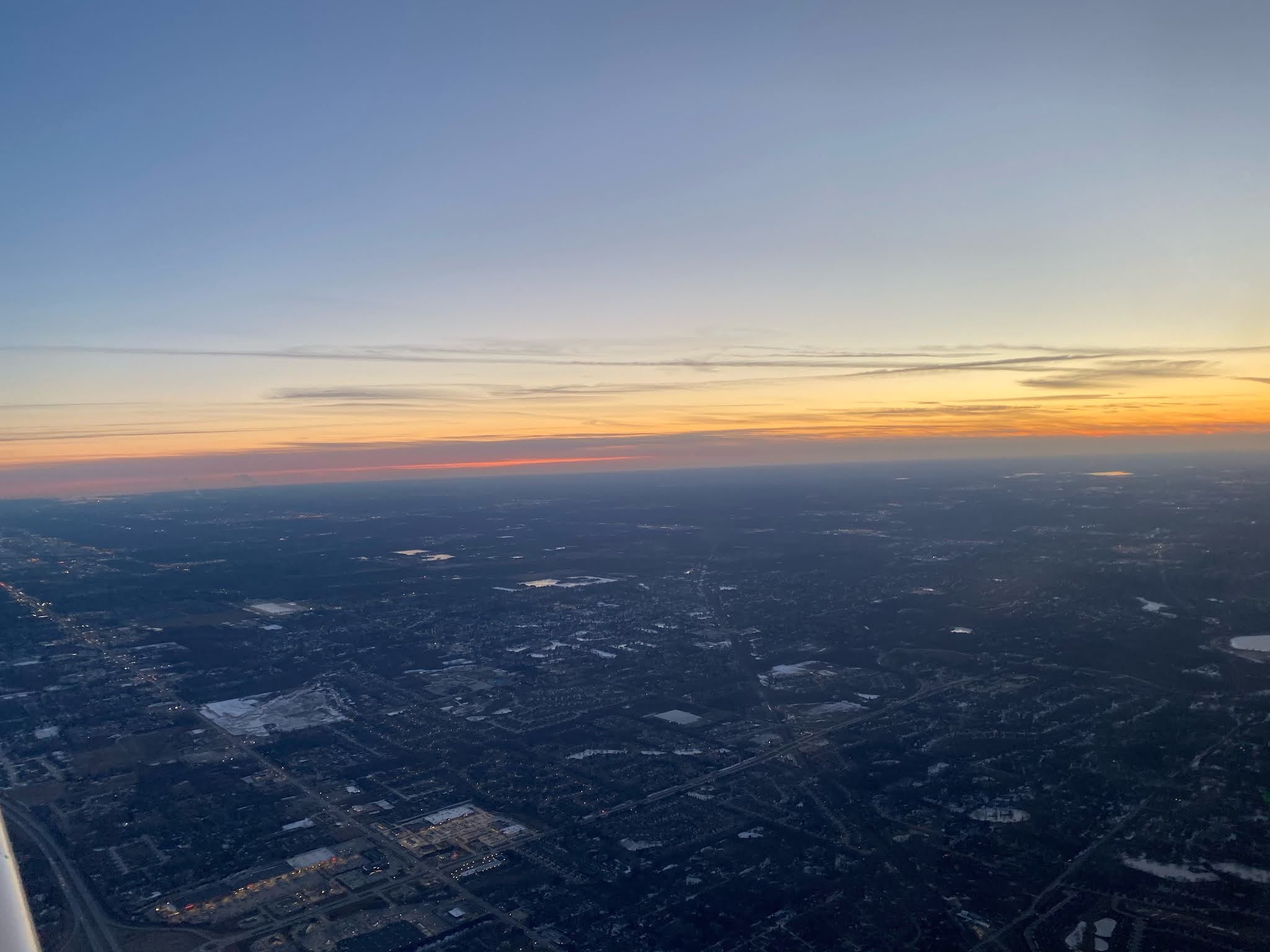
Last night was beautiful out with winds beginning to calm, and many a firework being lofted into the air.

A perfect opportunity for finally regaining night flying currency.

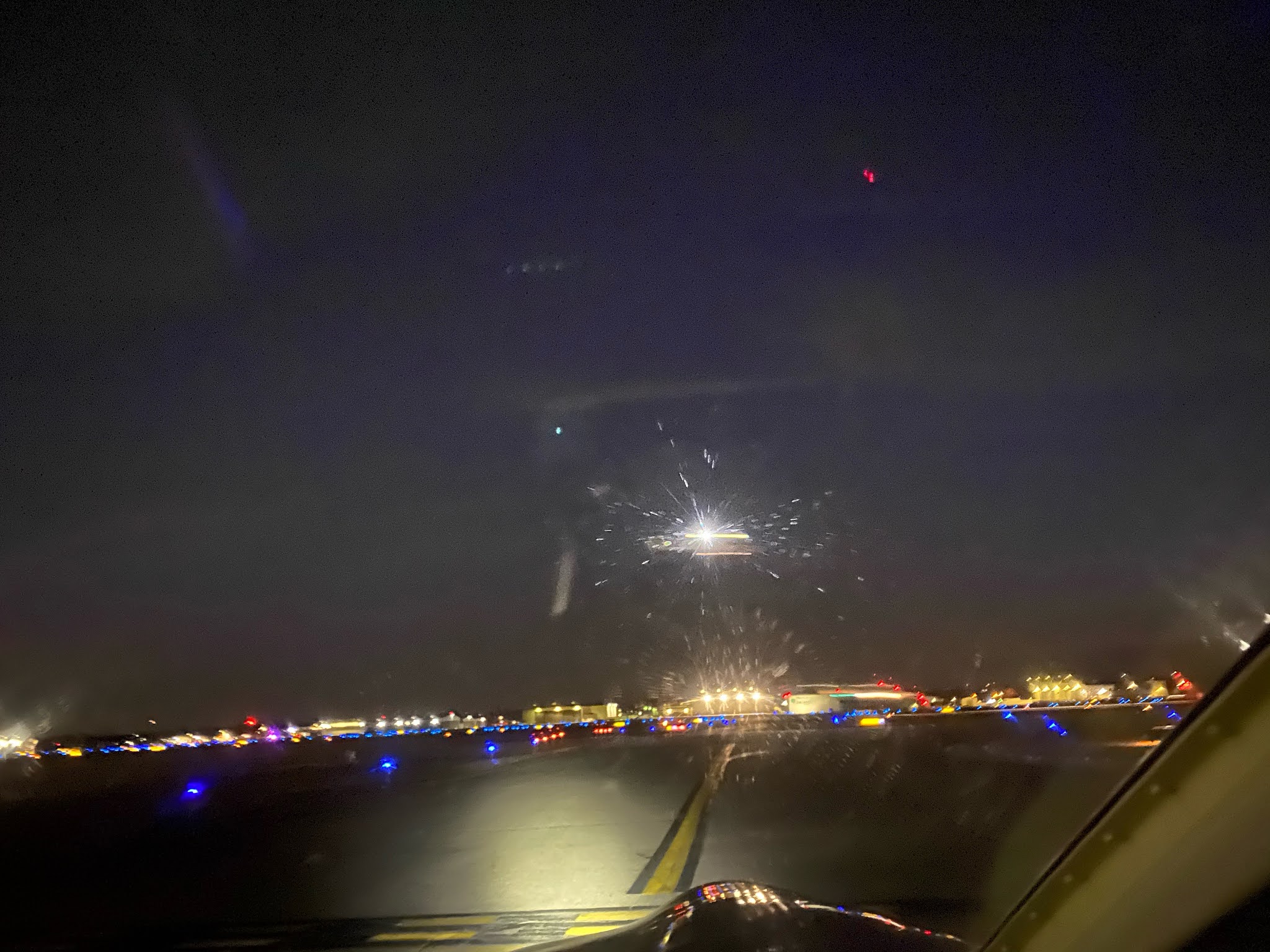
So I headed to the airport and did a pre-flight during twilight and then once it was full on dark an hour after sunset I took off into the night sky.


 A few planes were in the area watching the fireworks.

I started on 27R and did three decent landings. Then a seaplane came in to land and another plane wanted to be in the airspace to the north to watch the fireworks so the Tower had me do left traffic on 27R which is pretty rare, as that puts you right into 27L's corridor. But, with no one else flying it was available. so I got to do a left pattern on 27R which felt really backwards, and a great landing.

Then I took off from 27R again with a left pattern and tower asked if I'd like to land on 27L and I said sure that would be fun.

So I did, and my first approach to 27L just didn't feel or look right at all, so I did a go around. I then did it again and did a good landing.

For the final landing I took off from 27L and did a left pattern for 27L and then landed 27R.  I then headed back to the hangar and shut down.

That's 1.0 and 7 night time, full-stop, landings.  

Night currency for carrying passengers is now again achieved, after a very long absence. 

Also, this flight marks my getting over 500 flying hours of experience. That hour flying last night got me to 500.4 hours total, which is a nice milestone.

Tuesday, November 30, 2021

Flying IFR - Lesson 38 - IFR By Night

It was a night lesson tonight.  This is good as I'm way out of practice in night flying, and it was my first time flying IFR at night.

Got to the airport just before 6pm and started preflighting the plane, 88J.   It was a  No-Go as the plane had a very loose alternator belt and some other issues that Kevin didn't like, namely the bolts connecting the landing gear were loose and wouldn't tighten on one side.  The on to N8570F and that one got down-checked as a couple of the bolts attaching the right landing gear were actually broken which is not good.  Someone messed up a cross-wind landing and over-stressed them it would appear.  These planes do get used kinda hard.

So we were kinda running out of planes.

So on to N1869H.  The plane with the ever-sliding seat and the mis-rigging.  Sigh.

At least it passed the preflight. Yes, the seat did slide. And the yoke must be held slightly left in order to fly straight.  Sigh.

We then went to do the most recent instrument check-ride the examiner had done to get used to it - Troy RNAv 9 circle 27, then KPTK RNAV 27L and KPTK Localizer Back Course 27L partial panel.

Interestingly enough, we would do them VFR without flight following. Clouds were just high enough that it wasn't an issue to be VFR at 3,000 feet.

So, up we went to Troy, and I did the RNAV 9 full procedure with a miss and not a circle as circling to 27 is not authorized at night.

Then to Pontiac and I did the RNAV 27L, then got told to contact Detroit Approach for the Localizer Approach as Pontiac didn't want us doing that one by ourselves.

So just as I'm getting vectored, Kevin kills the G5s and I'm partial panel while being vectored. 

In the dark.

With the NAV 2 VOR instrument being unlit.

So, I have to shine a red flashlight at it while flying.  Yay, a nice new challenge.  I get everything programmed and identified and fly vectors as I get the approach going.

Good approach, a fair bit of work keeping the needle centered doing a few S-turns but then got it locked in and all good.  Nice descent to Minimum Descent Altitude and a pretty good but not great landing.  I need two more landings to get night current again, hopefully I'll knock those out next week.

Instrument flying is a bit more challenging at night - you're still looking just in the cockpit but you don't have as much peripheral vision and the instruments are harder to make out.    Upsides are its dark so there's less distractions outside, and the runways do stand out from the backclutter a lot more at night. 

Overall I feel I'm getting better at being more precise with both heading and altitude, but I do need to keep a sharper eye on the altimeter as I do have a climbing tendency. But, this time I got the plane trimmed out just right on at 3,000 feet, mis-rigging and all. That felt good.

A challenging flight and a lot of fun to do. 

That's 1.4 night with 1.0 simulated instrument, 3 approaches, 1 hold and a good night landing.

Saturday, January 23, 2021

Flying - Night Current Again!

So in keeping with my resolution to fly more, this evening I jumped in the plane.

The aircraft performance was outstanding with the -4 degree air.   Amazing climb and cruise performance, and I had to ease back the throttle a lot more than usual in the pattern as the plane just wanted to get up and go.


I left as the sun was setting and it was gorgeous out.  I headed to the northeast as the pattern was absolutely packed.  The wind was about 7 knots from 210 degrees. The sky was clear up to 12,000 feet which was a nice change from the overcast we've been having every other day I tried to fly this month.

 I climbed up to 5,500 effortlessly and maneuvered for a bit.

I then returned and reentered the pattern and did  3 landings after sundown that still counted as day landings and then it became night in terms of FAA regulations for night currency. 

Night has multiple meanings, and for night currency, night starts an hour after sundown.

I then got in the pattern and did 6 takeoffs and landings.  The wind had dropped to calm and flying at night was fun as all get out.

A few other planes were around, and they were much easier to see at night all lit up as they were.


The landings were smooth as silk.  I mean they were really, really good. 

A lot of fun was had and that was my first time flying solo at night, and my first time flying at night, period, in over a year.      

I should have done that earlier as I was overly cautious about night time flying solo and really shouldn't have been quite that concerned about it.  Nothing to it but to do it, and the landings at night were, if anything, easier than in the daytime.

I'm now current to carry passengers at night and I will maintain that currency and get to flying at night more often, because it is fun, and it's good to keep in practice.

That's 1.8 with .6 during the day and 1.2 at night with 3 daytime landings and 6 night time landings.

Friday, October 20, 2017

Flying - Fly By Night To KLAN

After not having flown at night for over a year as my last night flight was in April 2016 it was time to get up again and give it a go.

Considering the long time since I had last flown at night, I decided it would be prudent to take an instructor along for safety reasons and guidance, but I would be pilot in command and sole manipulator of the controls.

I planned a flight from Pontiac to Lansing to get some cross-country time and some more experience in Class C airspace.

The instructor suggested we do some landings at Lansing to get me comfortable with playing in a Class C and to get my night rating back up current. So that is what we did and I had the route prepared. It would prove to be an experience.

I arrived at the airport and started to preflight 88J.

It was a very nice evening with light winds of 5-6 knots out of 260.

Preflight was good and it started fine but during the runup I saw two things:

1. The vacuum system was sucking, or rather not sucking enough and was making both the heading indicator and attitude indicator inoperable.

Ok, you don't need those to fly VFR bit they're certainly nice to have and I'd be happier with them functioning especially on a night flight.

2. Next, the Alternator warning light came on and stayed on.

Losing electrical power and thus all lights, turn coordinator and radios and transponder while flying at night in controlled airspace would really suck.

The instructor based on the other instruments seemed to think the alternator was working and we could try it but he asked "If you were alone, what would you do?"

I stated that two error conditions meant the plane already had two strikes and three would mean we're out, so I would not fly it under those conditions.

He said that showed good judgment and was the right decision so we parked it and got another plane.

By now it was full on dark so the red/white LED flashlight I had brought along was necessary and I used it while flying a fair bit as well, as the instrument panel lighting in the Archer left a bit to be desired at times.

So we got into N8570F and all worked on that plane. Before we took off the instructor noted I could ask Pontiac for flight following so I did cal ground and we got a transponder number and directions to call Detroit departure after we took off. Tower then cleared us for a straight out departure and off we went.

We were soon handed off to Lansing approach and as we were flying a course of 282 they said expect a landing on 28L, which is the really big runway at Lansing.

On the way another plane was also flying at 4,500 in the same general area so Lansing had us descend to 4,000 and instructed the other plane to make no altitude changes without informing them. Flight following can come quite in handy for noise abatement purposes.

As we got closer they then switched us to 28R which is the forlorn little brother to 28L. At 3,600 feet compared to 28L 8,500 it does get lost in the mix, and pilots have apparently sometimes almost landed on 28L'staxiway thinking it was 28L and 28L was 28R, especially as 28R is not as brightly lit as 28L or 24, which would cause an issue later.

So we headed in and landed on 28R. Landing at night was interesting - first off 28R really does seem like the red-headed stepchild of a runway at KLAN, and its not nearly as well nor as brightly lit as the other runways, at all.

But I found it and at night it feels like you're going to land well short of the runway. Adding to the fun is that if you fixate on the numbers during landing at night you will drive the plane right into them, you have to be ready to look down the runway and flare earlier than it feels like you need to. Yes, that first landing was a bit exciting and a little flat-ish but not terrible, but the instructor did mention I would want to flare - NOW. Some people get nervous I guess.

So we did a full stop and did a taxi back along echo and took off again, and then the fun started.

A good takeoff but the lights of 28R were quickly lost in the background as Tower had us really really extend our upwind for traffic, and as we came around I had lost 28R but the instructor saw it and then we turned cross and downwind and then final we saw it nice and lit up and made an excellent approach. Heck it was so beautiful it would be a perfect landing, I mean everything was lined up just right and we were just about to make out the numbers when....

Lansing Tower: "N8570F I show you lined up to land on Runway 24".

Oh family-blog me.

Me: "N8570F is going around". So go around we did. Good thing I'm good at those and have them down pat.

Yep, 24 was lit up brighter than a Christmas tree and drew us like moths to a flame, and with the extended upwind and with 28R by comparison being not readily visible, both the instructor and I thought we were lined up on 28R at the time.

No runway incursion occurred, problem was averted, and it was a good learning experience.

We then did a couple more landings on and takeoffs from 28R and then headed back to Pontiac again with flight following.

A good landing at Pontiac at 27R with winds calm and that was a nice cross-country night flight.

2.0 and 4 night landings.

Saturday, April 16, 2016

Flying Lesson #47 - Night Time Patterns Properly Performed

Yesterday night was just a beautiful night for flying. Ceiling and visibility unlimited and a 8-11 knot winds coming in from 110-120 degrees.

I pre-flighted N757MK and Will told me we would head to Lapeer to do some night pattern work.

Lapeer is a nice uncontrolled field, complete with an intersecting grass strip that's closed at night, but Will has stated he'll take me there soon to do some grass field work. So we waited until it got dark and then I did a nice crosswind takeoff and headed to Lapeer.

Then I got the AWOS for Lapeer, made radio calls from about 10 miles out, activated the runway lights, entered the pattern at Lapeer, there were no other aircraft around, did the radio calls, and came in and did a darn nice landing on Runway 18.

That was the start of the trend as every single landing I made last night was great. Nice and smooth, good approach, good roundout and flare. Each landing to a full stop with good braking, then get on the taxiway and turn and call and do it again. I was consistently ahead of the aircraft and identifying potential issues, correcting and critiquing before Will needed to say anything on every pattern. He was very happy with my flying and awareness.

After three landings I asked if I could practice some short field takeoffs and Will said sure. So I taxied to the runway, held the brakes, had the throttle to full and then took off with a Vx climb of 65 knots until Will declared the "obstacle" was cleared and I then pitched for 80 knots climb and did the pattern and landing once again.
He liked those and after three of them suggested I do soft field takeoffs, which were very cool to do at night. For the soft field you don't stop but continue rolling onto the runway with 10 degrees of flap, maximum elevator and do a wheelie with the nose wheel off the ground until the plane lifts itself off the runway, then you ease up on the back pressure and keep it 10 feet above the runway in ground effect until the airspeed builds up enough to be actually flying and then you smoothly climb out, retract the flaps, and do the pattern. I did a couple of those and had a blast - soft field takeoffs are fun, and at night they're even more fun.

During the pattern work and after a couple landings I think Will deliberately went out of his way to appear nonchalant and appearing to not be paying attention to what I was doing and acted as a passenger just along for the ride. It was all me. That was a confidence builder indeed.

Then it was back to Pontiac and I radioed the tower, was told to report a 2 mile downwind for runway 9 left and to avoid some traffic so at 4 miles out I started a gentle descent to pattern altitude, called in and reported at two miles for the downwind and got cleared to land and did yet another excellent landing and was immediately cleared without even asking to take delta to cross Runway 18 and take the plane back to the flight school. The tower knows where the plane lives all right.

That was an amazing flight lesson. My confidence in my landings is way, way, way up, and I know I can do this. Will was very happy with the landings and pattern work and told me I did everything just right and it was all me this flight, and he has no problem signing me off for my next couple of solo cross countries. To say I'm ecstatic about all of this coming together would be an understatement.

Unfortunately, two of three 172s at the flight school are down for maintenance so my cross country that was scheduled for today - today with the weather being perfect - light winds, not a cloud in the sky perfect, is cancelled as the bird is not available. Damn.

That's 2.1 more nighttime flying hours and nine great full stop landings done, bringing my total nighttime full stops to the required ten. That was a lot of fun.

Tuesday, April 12, 2016

Flying Lesson #46 - Fly By Night Away From Here

Last night the weather indicated we would be good to go, so I headed to the airport.

I arrived as the sun was setting.

It would be my first night flight experience.

So I did the pre-flight - full fuel, good oil, everything was A-OK and I was ready to go.

Will arrived and said that since the weather looked good but there was a good crosswind around KPTK. So, instead of starting with night time pattern work we would do the night cross country today over to KHAI, Three Rivers Airport off to the west.

So I worked the radios, got taxi, did the run-up and got takeoff clearance and I took off into the sunset, keeping the ailerons into the wind as I did so. We had approval for a left turn onto course so I did a gentle climbing turn and headed on course up to 6,500 feet.

There was a cloud layer that was pretty scattered with lots of holes in it and it looked just beautiful.

We went above it to 8,500 feet, the highest I've been so far, and then dropped down after we had passed the cloud layer.

To say that it was an awesome ride is an understatement. The air was very calm up there, and it got darker and darker as I flew to the west.

Soon it was pretty much pitch black out with the light on the ground, the moon and stars as the only illumination aside from the plane itself.

Will introduced me to pilot operated lighting as we passed by a few fields - 7 clicks on the frequency and the runway lights up nice and bright, 5 and its medium and three and its low.

Then approaching KHAI I dialed in the AWOS, set the correct frequency and turned on the runway lights. No other traffic was in the area and I made a very nice entry into the pattern and a nice landing. Landings feel different at night.

Then we headed back to KPTK, flying at 5,500 feet and profusely enjoying every minute.

I got the ATIS and there was still a crosswind going at KPTK. I called KPTK tower when I was 12 miles out and was cleared to enter the downwind for 27L. We got to land on the big runway this time.

I came in and did a very nice crosswind landing. I then exited the runway and got clearance to taxi back to the flight school and my first night time flying experience was done.

That's 232 nautical miles and 2.7 hours on the Hobbs meter for my first night time cross country.

Should the weather hold, I'm going up more at night this week to get the pattern work done and get more night time flying experience.

Unfortunately, I'm going to lose Will to the airlines - he just got a position with Delta Connection and Will will become one of their youngest copilots starting mid-May. He's a great guy and fine pilot indeed. I'm happy for him to be moving ahead with his dream of being an airline pilot, but sad to be losing a great instructor.