Showing posts with label IWM Duxford. Show all posts

Tuesday, September 03, 2024

London Trip 8 - IWM Duxford - Air And Sea

The last gallery we visited was the Air and Sea Exhibit.

The gallery looked at air power at sea.

Lots of rare planes are on display.

Including early carrier borne aircraft like the 1930s Hawker Nimrod:


The 1941 Fairey Firefly

 The Grumman Wildcat, first called the Martlet in Royal Navy service. This one is the only flying condition Wildcat in all of Europe.


Then the Jet age represented by

The Hawker Sea Hawk:


The De Havilland Sea Vixen, the naval version of the Vampire

The Hawker Hunter also served in the Royal Navy, not on a carrier but land-based in the FRADU Unit:


The Hawker-Siddley Buccaneer, the famous low level British attack aircraft.  Here it is demonstrating its low flying capabilities, being so low it is hiding behind a trailer of assorted stuff.

The Royal Navy operated the F4 Phantom as the FGR2 (This Phantom here was actually used by the RAF and not the Fleet Air Arm):


And of course, there are naval helicopters like the Sea King:


The Westland Wasp, with this particular craft serving in the Falklands War.

It's a fantastic display of naval air power.

IWM Duxford is a must visit if you an enthusiast of airplanes, history, or technology.

Duxford is truly an amazing museum and well worth the effort getting there from London.  Getting back to London was, however, a whole 'nother story.

Saturday, August 31, 2024

London Trip 10 - Duxford - The Battle Of Britain

We entered the Battle Of Britain gallery.

Duxford was the sector station for G Sector in 12 Group during the Battle.

A  shot down BF-109 greets you as you walk in:

This particular BF-109 E-3 crash-landed in Sussex during the Luftwaffe’s last major daylight raid on London in September 1940. The plane was subsequently restored to what it looked like immediately after the crash.

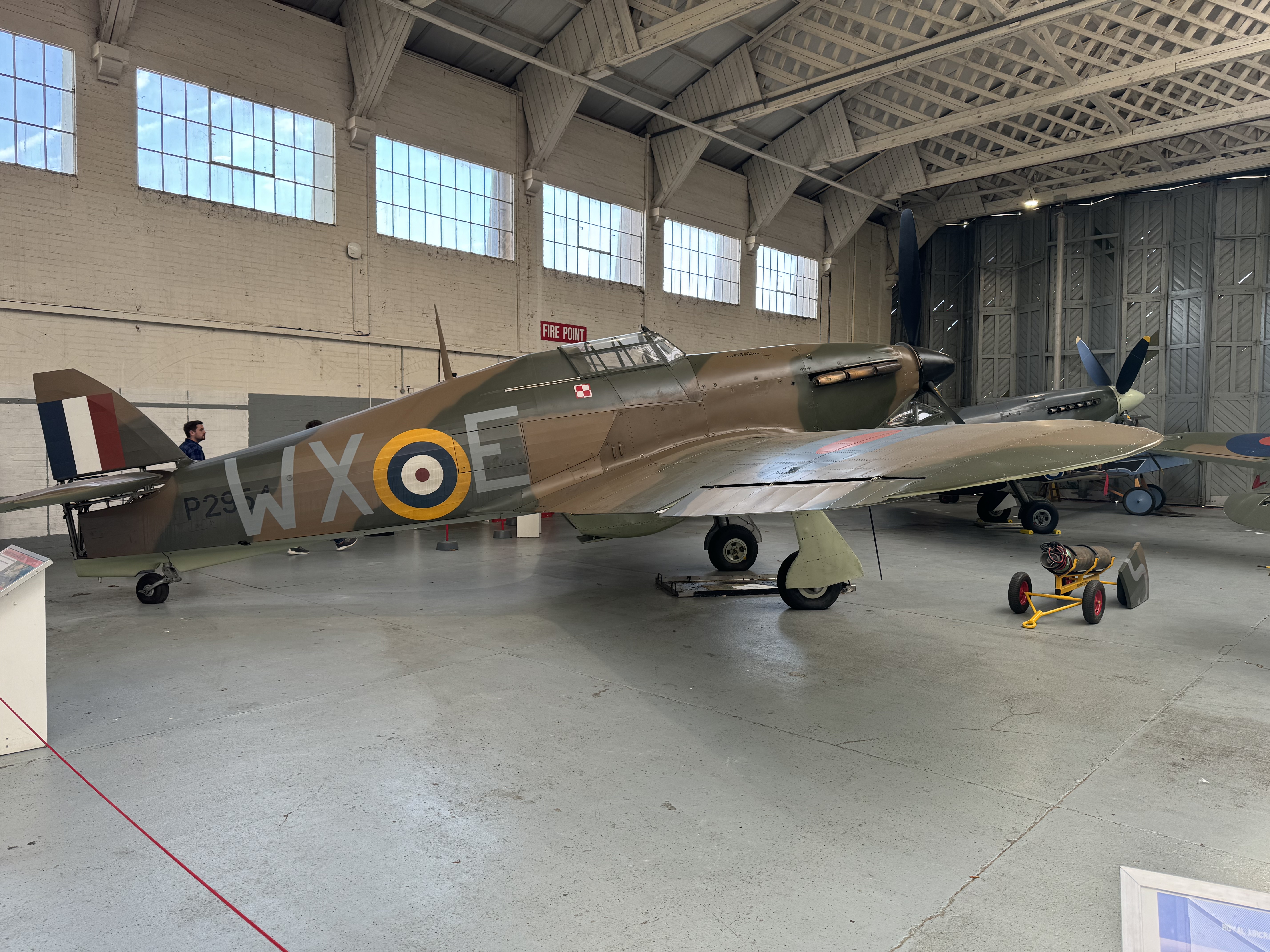
There's Hawker Hurricanes:


You can look inside the cockpit of one of the Hurricanes:

And of course, there are Spitfires:


A Bristol Blenheim bomber:

There's also an unusual plane used in the Battle of Britain, albeit in a non-combat role:

The Cierva C30A autogiro was used by the Royal Air Force to check radar accuracy. The Radar Calibration Flight 1448 was based at Duxford from 1940 to 1942.

Search lights and antiaircraft guns are also on display:


After the Battle of Britain was won, the Germans then in 1944  bega sending V-1 flying bombs and a captured V-1 is on display at the end of the exhibit.

The Battle Of Britain gallery is very well laid out complete with lots of detailed information about the pilots ground crews, observers, controllers, and others who all played a role in the battle.

Friday, August 30, 2024

London Trip 9 - IWM Duxford - On The Way To The Battle Of Britain

On the way to the Battle of Britain and Air and Sea Gallery Building, we got to see a few more aircraft flying and some static aircraft.

A Yak-52  did a nice takeoff and flying demo.

 The Yak has a great registration number:  G-OALZ. Very nice.

A British Antarctic Survey Twin Otter blasted us with its prop wash during its run up and then took off:

They were not kidding about the prop wash.

A B-17 was also out to be seen:


A bunch of passenger transport aircraft were on static display:


There was also a Spitfire on Static display:

Near the Spit was a canteen, so we sought refreshment and bought some Spitfire Amber Ale to drink in front of the Spitfire.

Now refreshed with the Bottle of Britain, We  headed into the Battle of Britain Exhibit.

London Trip 8 - IWM Duxford - The American Air Force Museum

After seeing the planes fly, we went to the American Air Force Museum that is at Duxford. 

Duxford from 1943-1945 during World War 2 was the home of American Fighter Groups of the 8th Air Force, first the 350th and then the 78th. Both
P-47 Thunderbolts and P-51 Mustangs flew from the airfield.

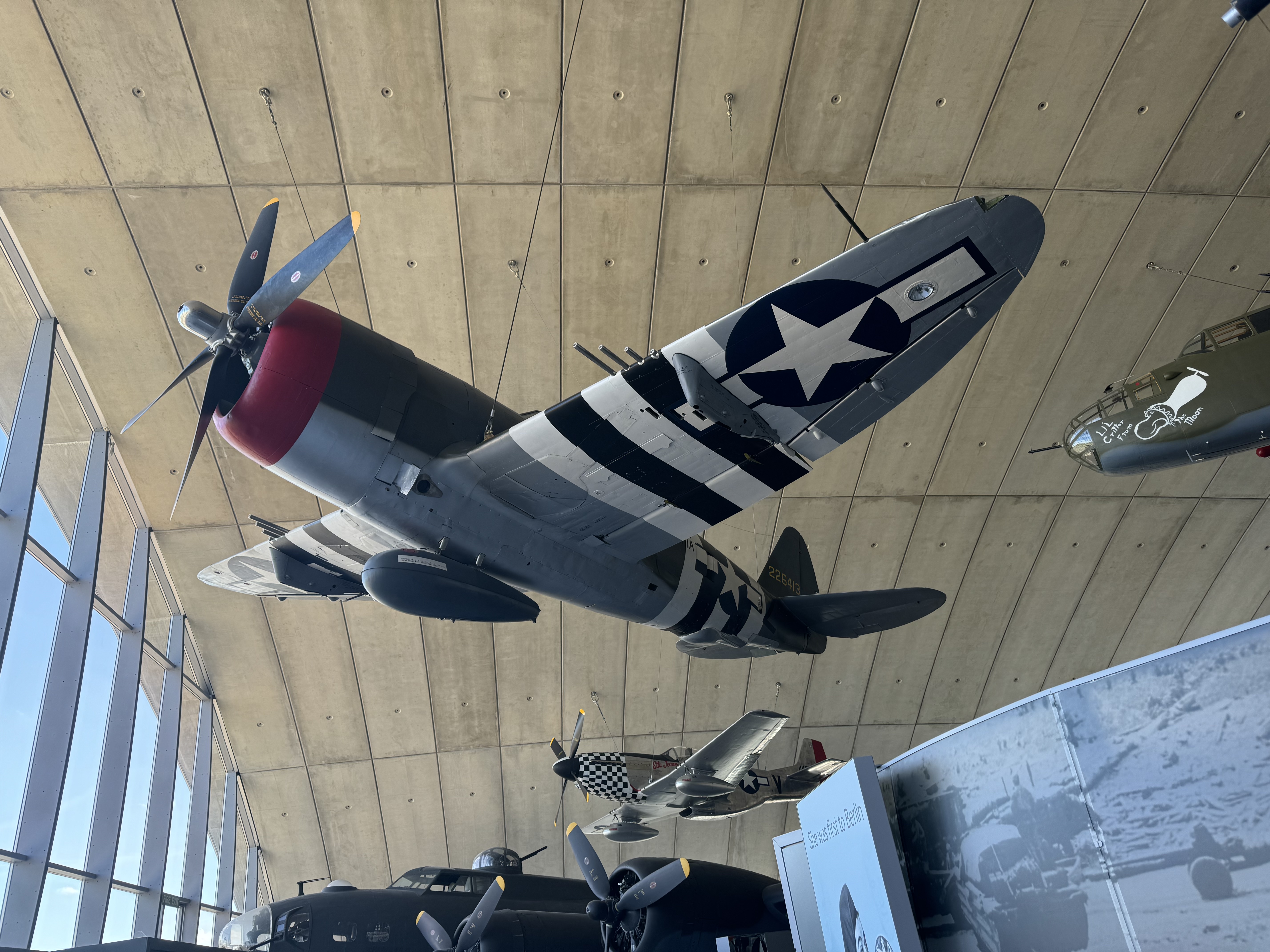
Or course the American Air Force Museum has both a P-47 Thunderbolt and a P-51 Mustang on display:


 They also have an excellent collection of other American Aircraft including a B-24, a B-25, and a B-29:


Modern jets included an F-4, an F-15, an F-111 and an A-10:


An SR-71 is proudly on display, and it is the only SR-71 on display outside of the USA:

Quite cool to see.

And a U-2:


There's various placards and informative displays about the aircraft and those who flew and maintained them.

There's also a computerized memorial wall where the names of all of those lost while serving in the 8th Air Force in World War II are projected in rotating fashion.  It's a rather humbling long list of names and takes awhile for it to scroll through.

The American Air Force Museum is very well done at IWM Duxford and is well worth a visit.  Some of the British certainly do remember the American contribution to World War 2 and the Cold War, and remember and honor it well.

Thursday, August 29, 2024

London Trip 7 - IWM Duxford

Leaving the first building, we got to hear the sound of the Merlin engine in flight. Then we got to see a Spitfire actually flying.


 This was very cool to see a Spitfire put through its paces.

Duxford, an aerodrome since World War One, is still an active airfield with both grass and paved runways.


 The Spitfire is a great looking and sounding plane.

But that wasn't the only Spitfire that became airborne during our visit.

After this Spitfire landed, two double bubble Spitfires took off in tandem.


The double bubble Spitfire is quite a rare variant of the Spitfire. The ones at Duxford carry passengers who get to experience the thrill of flight in a Spitfire.

They flew around for awhile and then came in for nice smooth landings.


In addition to the Spitfires, their historic foe also took to the skies.


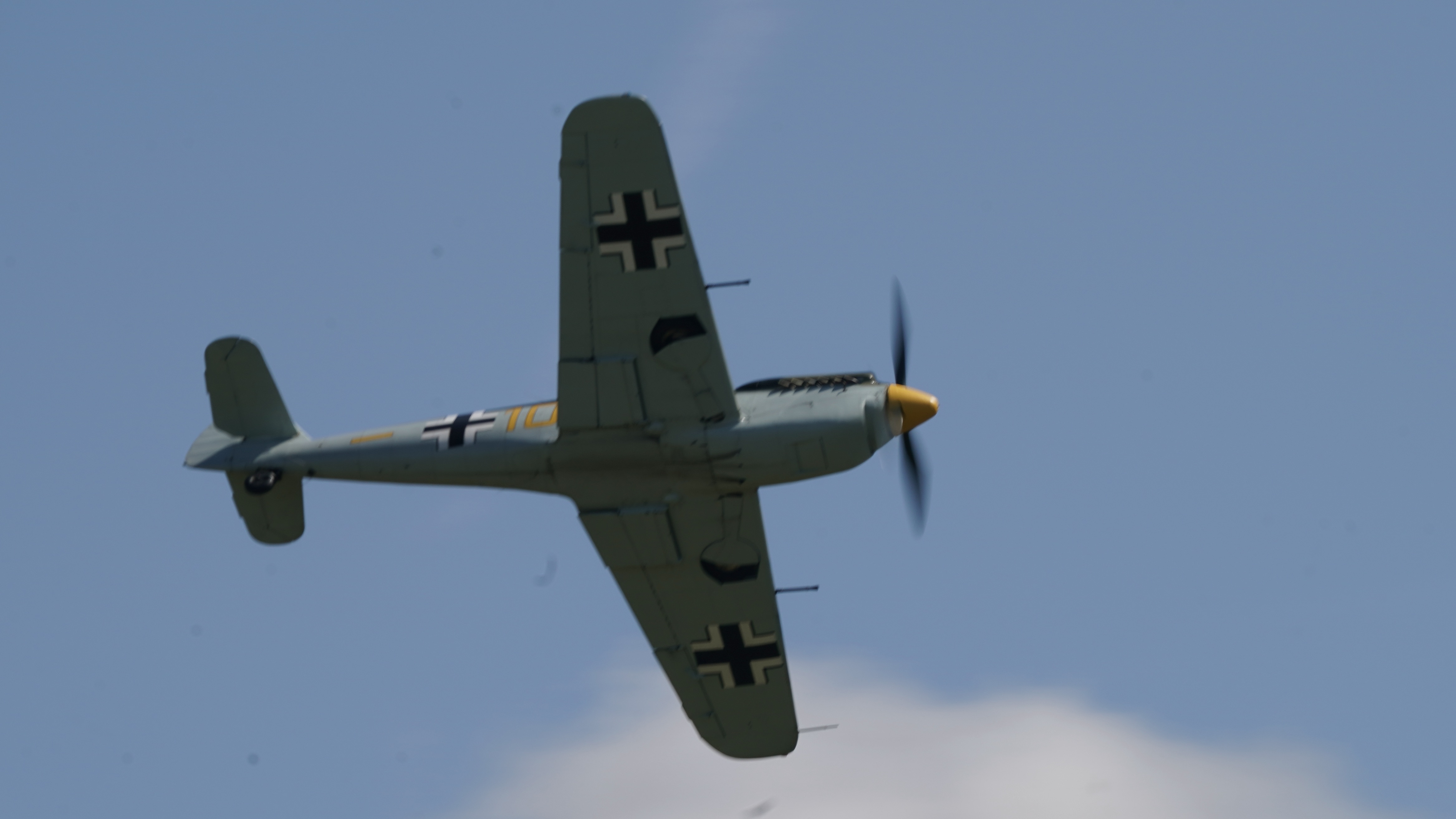
The Messerschmidt BF-109.  In this case a very close copy, the license-built Spanish Hispano Aviacion Buchon.


It was fantastic to see these warbirds flying.