Showing posts with label Archaeology. Show all posts

Monday, January 06, 2025

A Neat Hanukkah Discovery

The Times of Israel: ‘Miracle’ hoard of Hasmonean coins discovered during Hanukkah in Jordan Valley dig

 The Hasmoneans were the descendants of the Maccabees, so finding a hoard of coins belonging to Alexander Jannaeus during Hanukkah is rather cool, and timely.

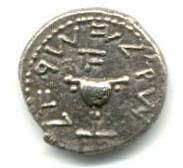
These coins, made of bronze,  are known as prutahs or lepta (plural: leptons).

 For my Christian readers, these prutahs of Jannaeus are agreed upon by scholars to be the coins referred to as the "Widow's Mite" in the Christian bible  (Mark 12:41-44 and Luke 21:1-4).  These coins are rather inexpensive at $35-$75 or so, and are a nice addition to any coin collection or just to have as a very neat historic item with significance for both Jews and Christians.

Thursday, September 07, 2023

Amazing New Archaeological Find In Israel

It's not everyday that a bunch of Roman swords in good shape get discovered after being hidden away for 2,000 years.

i24news:  Rare cache of Roman weapons discovered in Judean Desert cave 

A fascinating discovery in the Judean Desert: archaeologists unearthed a cache of well-preserved Roman weapons, including four swords and a shafted pilum weapon, believed to be around 1,900-years-old. 

The ancient artifacts were hidden in a crevice inside a cave located in the Ein Gedi Nature Reserve.

Interestingly, the weapons were only found by a happy bit of serendipity: An archaeologist was visiting the cave to examine another new and important, but chronologically earlier and distinct find,  in the same cave - a much earlier inscription from the First Temple Period - and happened to see the weapons cache as he examined the inscription.

The weapons likely date back to the Bar Kochba Revolt, and were hidden sometime between 132 and 135 CE. 

Impressively, three of the four swords include their sheaths and are in rather good condition for their age as can be seen in this picture of the artifacts on display from StandWithUs:


The cave system itself has tons of artifacts in it and evidence of habitation going back 6,000 years, and new finds keep being discovered. The dry Judean desert air has preserved lots and lots of historical artifacts that continue to be discovered as archaeologists probe the cave’s history and secrets.

Friday, October 21, 2022

Ancient Graffiti

Quite a neat discovery recently in David's Tomb in Israel, or it could be claled the Tale of the Medieval Tagger.

The Jerusalem Post: Graffiti of knight from Middle Ages discovered in King David's Tomb

A piece of graffiti bearing the name of Knight Adrian von Bubenberg along with his family emblem was discovered on the wall of King David's Tomb on Mount Zion, in Israel's capital of Jerusalem, the Israel Antiquities Authority announced on Thursday.

Found as part of the IAA's research project documenting pilgrims' inscriptions, the researchers discovered the graffiti bearing the name of the Swiss noble, who was dubbed a Knight of the Holy Sepulchre following his pilgrimage to Jerusalem in 1466.

 "Von Bubenberg was here" doesn't have quite same ring to it as "Killroy was here," but he was a solid 473 years ahead in leaving his mark.

Wednesday, July 14, 2021

Another Neat Archaeological Find In Israel

The Jerusalem Post:  2,000-year-old ‘Freedom to Zion’ coins found in biblical heartland   

The two coins, one from the First Jewish Revolt and the other from the Second Jewish Revolt against Rome were found during archeological exploration in the northern Judaean dessert.

The coins were found in two separate locations in the region.

Finding the Bar Kochba coin in the northern Judaea is significant.  It;s apparently the first time such a coin has been found in the northern region that used to be the 11th District in Judaea.

Back then, the area constituted the 11th district of the province of Judea. Its capital city was Aqrabat; a modern Arab village with the same name still stands on the same spot.
“The coin from Wadi Rashash indicates the presence of a Jewish population in the area until the end of the Bar Kochba revolt, in contrast to what was previously believed by researchers: that the Jewish settlements north of Jerusalem were all destroyed during the Great Revolt and the area not resettled afterward,” Raviv said.
“This coin is in fact the first proof that the Akrabat region, the northernmost of the Judean districts during the Roman period, was controlled by Bar Kochba’s administration,” he noted.

 A very neat find that's going to change our understanding of history in the region, at least a little bit.

Friday, March 19, 2021

Archaeology: A New Find Of Dead Sea Scrolls

A new and amazing find of further scroll fragments in Israel.

Fox News: Israeli experts discover new Dead Sea Scrolls

Israeli archaeologists on Tuesday announced the discovery of dozens of new Dead Sea Scroll fragments bearing a biblical text found in a desert cave and believed hidden by Jewish refugees during a Jewish revolt against Rome nearly 1,900 years ago.

. . .

The newly found fragments of parchment bear lines of Greek text from the books of Zechariah and Nahum and have been radiocarbon-dated to the second century A.D., according to the Israel Antiquities Authority.

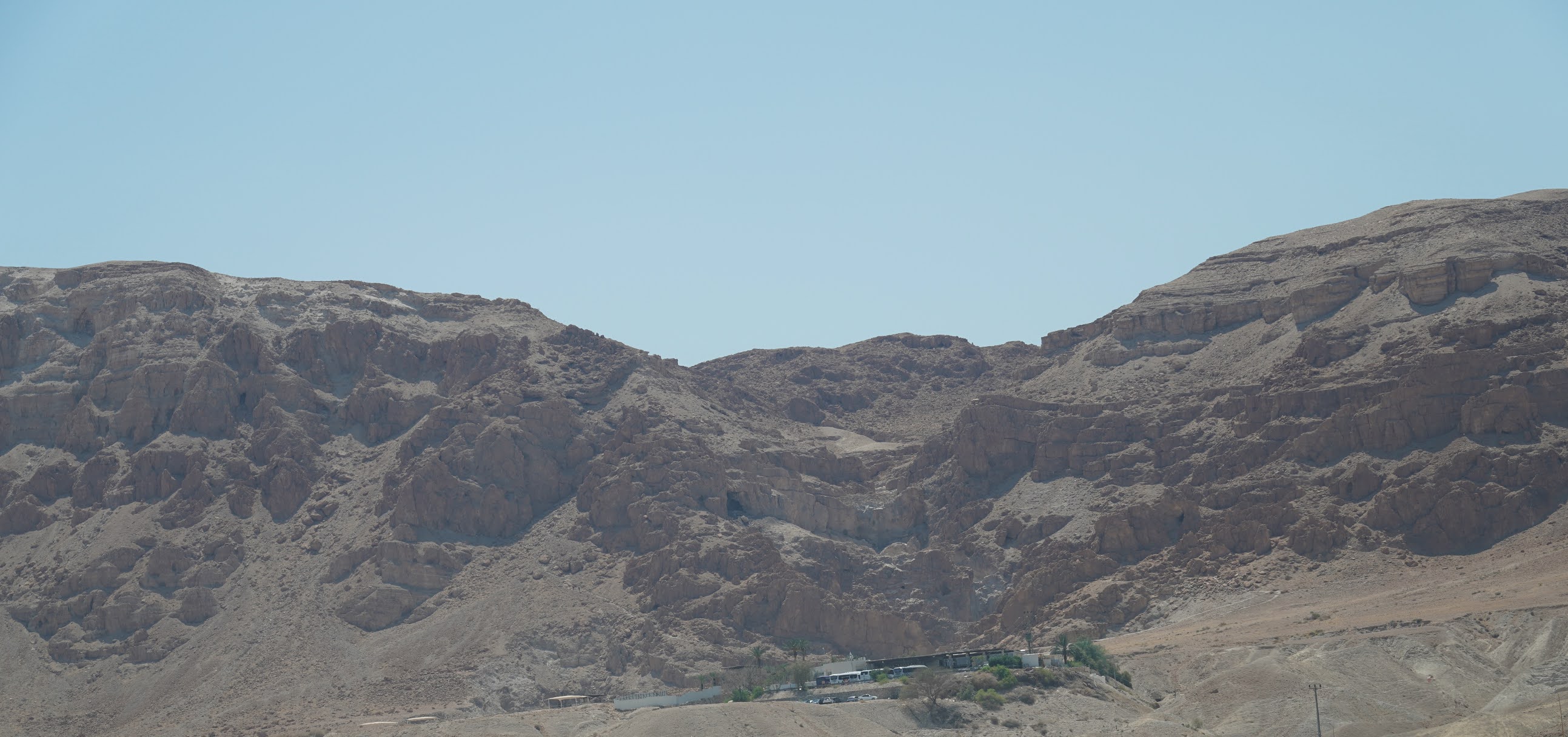
The Qumeran cave complex is extensive, hard to access, and with more finds occurring as it continues to be explored.


The exploration of the cave located on a cliff face, the Cave of Horrors, so named for the many bodies found in it during an earlier exploration, resulted in the find of these scroll fragments. 

In addition to the scroll fragments, and found even deeper in the same cave, was a neolithic woven basket 10,500 years old which is one of the oldest if not the oldest intact woven basket ever found, which is another impressive find.

Friday, July 24, 2020

Seals of History: Huge Trove of Artifacts Dating From The Judean Kingdom Period Found In Israel


There's been a new and important discovery recently in Israel near the site of the US Embassy.

From The Times of Israel: Huge Kingdom of Judah government complex found near US Embassy in Jerusalem

One of the largest collections of royal Kingdom of Judah seal impressions has been uncovered at a massive First Temple-period public tax collection and storage complex being excavated near the new United States Embassy in Jerusalem. The main Iron Age structure is exceptional in terms of both its size and architectural style, said Israel Antiquities Authority archaeologist Neri Sapir, who co-directed the excavation.

Uncovered only three kilometers (1.8 mile) outside the Old City, the compound is believed by Israel Antiquities Authority archaeologists to have served as an administrative center during the reigns of Judean kings Hezekiah and Menashe (8th century to the middle of the 7th century BCE).

Over 120 jar handles were found (pictures at the link) along with many other artifacts from the period from what appears to be a government center.

The article also points out another intriguing mystery - artificially created stone hills that may be hiding more archaeological sites beneath them.


Another amazing historical find.

Thursday, January 23, 2020

Archaeological Discovery: Volcanic Eruptions Can Turn Your Brain Into Glass

Everyone has heard of Pompeii, fewer of Herculaneum, another city also buried in the eruption of Mt. Vesuvius in October 79 AD.

Herculaneum, on the other hand, is less well-known, mainly because while Pompeii got the ash of about 4-6 meters worth which was easier to remove, Herculaneum got 25 meters of ash and was buried beneath it, along with a heavy pyroclastic surge that instantly toasted the remaining inhabitants but unlike at Pompeii it carbonized and preserved wood in objects such as roofs, beds and doors but turned the people there into skeletons rather than covering them in ash as at Pompeii.

Lots of interesting discoveries have come from both Pompeii and Herculaneum.

Herculaneum has surviving two-story Roman villas, as well as some preserved scrolls that scientists are still trying to be able to safely unroll and read, and many other well-preserved ancient artifacts.

The most recent discovery is that the pyroclastic flow didn't just kill people at Herculaneum by heat, it killed them with so much immediate heat that it vitrified the victim's brains, turning their brains into glass.

The Detroit News: Mount Vesuvius blast turned ancient victim’s brain to glass

Wednesday, August 21, 2019

Israel Day 3: The Archaeological Dig At Tel Maresha

Tel Maresha is not just a National Park in Israel, its also an active archeological site.

A settlement active at the time of the Maccabees, in the 3rd Century BCE, it was abandoned shorty thereafter.

The inhabitants cut caves into the soft limestone were used as basements of houses by the inhabitants and as workshops and importantly as columbariums. Most caves at the Tel are still unexplored, unexcavated, and many are still not even discovered yet, even after over 80 caves have been discovered at the Tel.

We first visited the main Columbarium Cave, which has been fully excavated.

We entered the underground cave through its arch leading on a descent downward.

To say it is impressively large inside would be an understatement:

What's a Columbarium? In this case its not how the word is normally defined.

In this case, it's an underground place to raise pigeons.

Each pigeon-hole was hand-cut into the rock, and yes, pigeons still live there.

Can you see the pigeons in the picture? Click to embiggen:

Pigeons create baby pigeons and pigeon poop, both important items in the ancient world - food and fertilizer.

There are over 20,000 pigeon holes in this main columbarium cave. Other pigeon holes, numbering in the thousands can be found in other caves.

Some let their photo be taken out by the exit of the cave.

Then we got to participate in an Archeological Dig.

Down into a cave we went.

The rooms were smaller, as the "floor" while seeming solid wasn't the floor at all, instead it was packed ancient dirt that had fallen into the cave over the centuries.

Now pretty deep underground in a cave system undergoing excavation, we got our trowels, buckets and after some instruction we began to dig into the ancient dirt, moving rocks and rubble out of the way.

It wasn't long before we began finding things. We were keenly aware that we were the first people to see these items in over 2.300 years.

Abby found a large fragment of an ancient plate:

All of us continued to find animal bones, pottery shards - both large and small. Leah and Abby discovered an small stairway leading down to an entry to another cave room and entrance, right where the archeologist figured it would be, which is why she had them dig there. That new found room will be excavated in time.

The dig felt much too short, and we could have spent days in there digging our way through history. If you're visiting in Israel it's a must-do.

Later, while sifting through the dirt brought up in the buckets, Leah found something amazing.

She saw a round small object and pointed it out. It was a bronze ring or possible jewelry adornment, washed off, it looked like this:

No one had seen it for over 2,300 years.

The archeologist was quite excited by the find and had it placed in the important finds bucket that is secured in the dig lab each day rather than in the loose pottery buckets that are less impressive and less prone to scavengers and site looters.

Yes, that was a real highlight of the trip.

Next the archeologist took us into we headed to a completely unexcavated cave.

Lit only by candles it was not a space for the claustrophobic.

Getting in took some wiggling.

There were tight tunnels to go through. We all went in single file with the archeologist at the head of the line and I was the caboose, very little room on any side.

This worked out well. Unfortunately one of the guys doing the dig had a panic attack underground due to claustrophobia. Natasha doing her therapist thing kept him calm enough to move and I was able to guide him back out to the outside where he calmed down. I then went back in and caught up to the group, following the trail of candles left as markers so I didn't head into any side passages.

Then we got pretty deep in to an area that widened out and we sat down to look around.

As one would expect, pigeon holes were cut in the walls.

There was an amazing structure made out of stone bricks but we were warned not to touch it or try to go behind it as there seemed to be a passage there but they didn't know if it was stable at this point or where it led to yet.

Then we headed out up an ancient stairway to the cave exit.

Seeing a cave fully excavated, participating in excavating one, and going through a cave yet to be touched were all amazing experiences the whole family thoroughly enjoyed. The experience of such closeness to ancient history was awesome.

To say it was an incredible and amazing morning was an understatement.

Thursday, September 13, 2018

The Discovery Of The Oldest Brewery in The World

An archeological discovery of a most important and historic sort was recently found in Israel.

The Times of Israel: 13,000-year-old brewery discovered in Israel, the oldest in the world

Finding the oldest known brewery in Israel should not come as a surprise.

After all, the Bible itself says: He brews.

Tuesday, July 03, 2018

Rare Ancient Jewish Coins Found in Jerusalem

Two impressive new and historically important finds of ancient Jewish coins from the First Revolt against Rome (66-70 AD) have been recently discovered in Israel.

A hoard of Year 4 bronze coins were recovered at the Ophel excavation from a cave near the Temple Mount. Likely buried there as the Romans were besieging and then conquering Jerusalem, its an impressive find of some very rare coins, as the Year 4 bronze and silver coins are quite rare and scarce, mainly because by then the Jews were losing the war and only Jerusalem and a few other outposts remained under Jewish control.

In addition to the hoard of coins found in the cave, a Year 4 Bronze was found in an ancient sewer duct, along with a sword and other accoutrements, under the Hagai Road that led to the Temple helping to verify Josephus's account of the Siege of Jerusalem that fighters and others took shelter form the Romans in drainage ditches where many were killed.

Talk about finds that just ooze history.

Two impressively historic numismatic finds found in Jerusalem within a short time and a short distance apart this year. Very neat indeed.

Tuesday, June 07, 2016

Ancient Collection of Ancient Jewish Coins Found

A coin collector's collection is found, at least 1940 years after they were hidden away, with some coins in the collection dating back 2,150 years.

The Times Of Israel: Cache of Hasmonean-era silver coins uncovered in Modiin

Dr. Donald Tzvi Ariel, head of the Coin Department at the antiquities authority, said the cache contained one or two coins from every year between 135 and 126 BCE.

“It seems that some thought went into collecting the coins, and it is possible that the person who buried the cache was a coin collector. He acted in just the same way as stamp and coin collectors manage collections today,” he added.

“The findings from our excavation show that a Jewish family established an agricultural estate on this hill during the Hasmonean period,” Tendler said.

Coins were also found there dating to the first Jewish Revolt against Rome, including one marked Year 2.

Another very neat find. Coin collecting has been going on for a very long time, and collecting a shekel and half shekel of each year for 9 years is a pretty indicative trend. It has been long known that the Medieval and Renaissance nobility collected coins, and it's neat to find evidence that coin collecting was going on in antiquity.

Friday, April 15, 2016

Yet Another New And Important Archaeological Find In Israel.

Yet another interesting and possibly timeline shattering artifacts uncovered in Israel.

The Detroit Free Press: Ancient letters reveal Bible bombshell

(NEWSER) — "A full homer of wine, bring tomorrow; don't be late." That command, written on pottery excavated near the Dead Sea, not only shows soldiers liked to drink in the Kingdom of Judah around 600BC. It might also push back the date of the Old Testament.

In analyzing 16 letters on pottery found at a fort in Arad, Israel, researchers at Tel Aviv University identified six authors, including the fort commander and a low-ranking quartermaster of the Judahite army. "And they wrote well, with hardly any mistakes," study author Israel Finkelstein tells the New York Times. This suggests literacy was widespread with perhaps hundreds of literate people in Judah at the time, which "is really quite amazing," Finkelstein tells Live Science.

Experts have long believed there wasn't enough literacy for the majority of biblical texts to be inscribed before 586BC when Judah's capital of Jerusalem was destroyed and elites were exiled to Babylon.

In other words, these texts show parts of the Old Testament — including the Books of Isaiah, Amos, and Hosea, and parts of Genesis and Deuteronomy—could have been written earlier than previously thought.

"Several (biblical) texts refer to events which best fit the reality in the years just before the fall of the Kingdom of Judah," Finkelstein says, per Discovery News. "There must have been some sort of educational system in Judah at that time." Because all forms of writing vanish after the destruction of Jerusalem and only re-emerge hundreds of years later around 200BC, he concludes "the first Judahite biblical texts were most probably put in writing in Jerusalem by priests and officials in the entourage of the king, possibly King Josiah."

Certainly literacy has been an important value for Jews for millennia, and to find writings from the non-priestly class including not just a commander of a fort but a quartermaster in 600 BC is an interesting discovery. If it revises scholar's timelines as to when the Bible might have been written, and their understanding of the people during that period makes it quite an important discovery.

Wednesday, December 02, 2015

King Hezekiah 's Seal Stamp Impression Found In Jerusalem Dig

An interesting historical find indeed has turned up in a dig near the Old City of Jerusalem.

The item, a 3,000 year-old seal impression, used to seal a papyrus scroll, bears the name of King Hezekiah.

The Times of Israel: Seal bearing name of Judean king found in Jerusalem

An amazing find of an historically valuable artifact from 3,000 years ago.

Tuesday, November 17, 2015

Antiochus IV's Fortress Of Acra In Jerusalem Discovered

A very cool archaeological discovery:

The Detroit Free Press: Ancient Greek fortress may solve archaeological mystery in Jerusalem

Archaeologists believe they have unearthed the ancient remains of the Greek fortress of Acra.

The discovery solves one of the city's “greatest archaeological mysteries,” the Israel Antiquities Authority said Tuesday. The 2,000-year-old remains were found under a parking lot in the City of David in the Jerusalem Walls National Park.

For the past 100 years, archaeologists have puzzled over the location of the ancient fortress, which was used by Antiochus IV Epiphanes to monitor activity on Template Mount and subdue the Jewish population.

The fortress was finally retaken from the Greeks by the Hasmoneans in 141 BC, and its discovery before Hannukah is rather timely.

Wednesday, September 30, 2015

Recent Archaeological Find Links

There have been quite a few recent interesting archaeological discoveries in the news lately.

1. You know the Greek ship where they found the Antkytheria mechanism? Looks like there's even more artifacts being found there, farther below the sea bed.

2. An impressive sarcophagus, weighing 2 tons and 8.2 feet long, dating to the Roman period was found in Ashkelon, Israel this month.

3. A dig in Jerusalem found a (so far) unique pyramid-stepped staircase and platform from the Second Temple Period.

4. King Tut's tomb may not have contained just his mummy, but also his mummy's mummy: King Tut's Tomb May Hold the Secret Grave of His Mother Nefertiti.

Wednesday, February 18, 2015

Found Gold Coins? You Can't Keep 'Em. On Incentives and Valuable Archaeological Finds

Or as kindly pointed out to me by Murphy's Law this post could also be titled: "2,000 reasons to keep your mouth shut".

And that is the problem.

The story from the UK's Daily Mail: 'Priceless' trove of 2,000 gold coins used by 10th Century Caliphate which once ruled much of the Middle East is found off the coast of Israel

In what is every warm-blooded diver's dream dive, a bunch of divers came upon a treasure trove of 2,000 Fatimid-era gold coins, off the historic and beautiful port of Caesarea, so in Israeli rather than international waters.

Unfortunately, as is often the case in the majority of countries around the world, the law provides that the divers don't get to keep any of the find when it is found in a country's territorial waters, and it all goes to the state.

Lest you think this wouldn't happen in the USA, try and take an artifact you discover, that no one else knew existed, from the bottomlands of the Great Lakes. Your head will spin as to how fast you will not only lose the item but have all your dive-gear and possibly your car (if it drove you to the dive site it can be fair game) confiscated as well. States are touchy about treasure located in their national waters.

2,000 gold coins provide a powerful incentive to shut up and pocket the find and not tell anyone you found them, especially if you won't receive a finder's fee. This creates some bad incentives as hiding the find would prevent archeological discovery, documentation and exploration of the site and creates an illicit market in the coins.

Passing off 2,000 gold coins of the era would cause quite a stir and lead to them being prosecuted, so the divers rightly followed the law by reporting the find.

The divers should be, and would be in a more perfect world, allowed to keep some percentage of the find considering it was unknown to exist until they found it and it was found by their efforts. This would ensure the site to be properly explored, preserve the coins and reward the finders to keep them and future finders honest and willing to come forward about such discoveries.

A great find and hopefully they'll at least be publicly named and given credit for the discovery, and it wouldn't hurt if they could be allowed to keep a few coins for themselves.

Thursday, January 22, 2015

Why We Don't Leave Nice Things With Idiots


Courtesy of The Telegraph, we learn that: King Tut's beard 'hastily glued back on with epoxy and that this priceless artifact may be irreversibly damaged at the Egyptian Museum in Cairo.

You see, this is why Europeans used to take such discoveries back to their home countries with them, to safeguard and display them so they're not left in the hands of complete morons.

Somehow, King Tutankhamen's beard was broken off the funeral mask, apparently during cleaning but no there seems to be owning up to it.  But that was only the beginning.

Instead of affixing it properly and doing the appropriate repair, they just shoved some epoxy in, which is really not how you're supposed to do it.

Yes, some "conservator" at the museum Bubba-Ho-Tepped King Tut's burial mask.

Not content with that level of damage, they then got some epoxy on the face itself and then scraped it away with a spatula.   This caused scratches to the gold face mask.

Here's the before.


Check out the Telegraph's article for after.

Unbelievable, to survive for thousands of years only to suffer at the hands of modern day incompetent Egyptian conservators.

It is to weep.

Thursday, May 08, 2014

Some Interesting Stuff Found Underwater

Seventy-one percent of the Earth is covered by water, so you can always expect to find something new, or in this case, find some things that are quite old:

In Lake Huron, an 8,000 year old caribou hunting camp, with stone walls to drive the caribou along a certain path for easier hunting has recently been found 50 feet under water. The are used to be part of a land bridge that connected Michigan and Ontario. Yes, the Great Lakes' water levels have been much lower in the past than they are now.

In San Francisco Bay, the wreck of the SS City of Chester, sunk in 1888 in a collision that took 16 lives, has been found upright in 217 feet of water. She was sunk after colliding in a fog with a Chinese vessel bringing over immigrants to the golden state.

Meanwhile, the search for La Griffon, one of the most famous and the longest missing ship in the Great Lakes continues, with a wooden beam found that may be the bowsprit of a ship, or may just be an pound net stake from an old fishing trap from the 1800s. So as of yet, there is still no definitive proof that Libert has found LaSalle's Griffin.

Thursday, February 27, 2014

It's Always In The Last Place You Look

Hidden fortress found under Alcatraz

Previously thought to have been destroyed, it turns out that the Civil War era fortress was instead buried under the prison.

From The Detroit Free Press:

A surprising find under what used to be America’s most notorious prison: Texas A&M researchers using ground-penetrating radar have discovered the remains of an old military fortress long believed to have been completely destroyed, reports the BBC.

. . .

The radar has revealed old fortifications along with buried magazine buildings and tunnels dating from long before the main prison building was erected in 1915.

Yet another neat find, and an excavation of the prison's parade ground should turn up some interesting parts of the fortress.

Meanwhile, it looks like another lost fort, Fort Caroline, thought to have been in Florida may instead have been in Georgia all this time.

Some people lose their keys, but it takes a country to lose entire forts....

Wednesday, February 26, 2014

The Mysterious Mummies Of The Tarim Basin Reveal the World's Oldest Examples Of Cheese

The Tarim Basin Mummies, located in China, have already turned a lot of what was thought to be known about Bronze Age Chinese history and cultural transmissions on its head when it turned out that the mummies were not ethnic Chinese but instead Western Eurasians. The mummies have just revealed another interesting revelation.

An examination of their tombs has produced examples of the world's oldest cheese, apparently produced using by the kefir method and dating back to 1650-1450 BC

The Detroit Free Press: Great Gouda! World's oldest cheese found - on mummies

The combination of dry desert air and salty soil prevented decay to an extraordinary degree. The remains and grave goods were freeze-dried, preserving the light-brown hair and strangely non-Asian facial features of the dead along with their felt hats, wool capes and leather boots. Analysis of the plant seeds and animal tissues in the tombs showed the burials date to 1450 to 1650 BC.

Some of the bodies had oddly shaped crumbs on their necks and chests. By analyzing the proteins and fats in these clumps, Shevchenko and his colleagues determined that they're definitely cheese, not butter or milk. It's not clear why people were buried with bits of cheese on their bodies, Shevchenko says, though perhaps it was food for the afterlife.

The analysis also showed the mummies' cheese was made by combining milk with a "starter," a mix of bacteria and yeast. This technique is still used today to make kefir, a sour, slightly effervescent dairy beverage, and kefir cheese, similar to cottage cheese.

The Tarim Mummies continue to provide interesting revelations about trade, innovation and migration in the ancient world.